Fall 2025
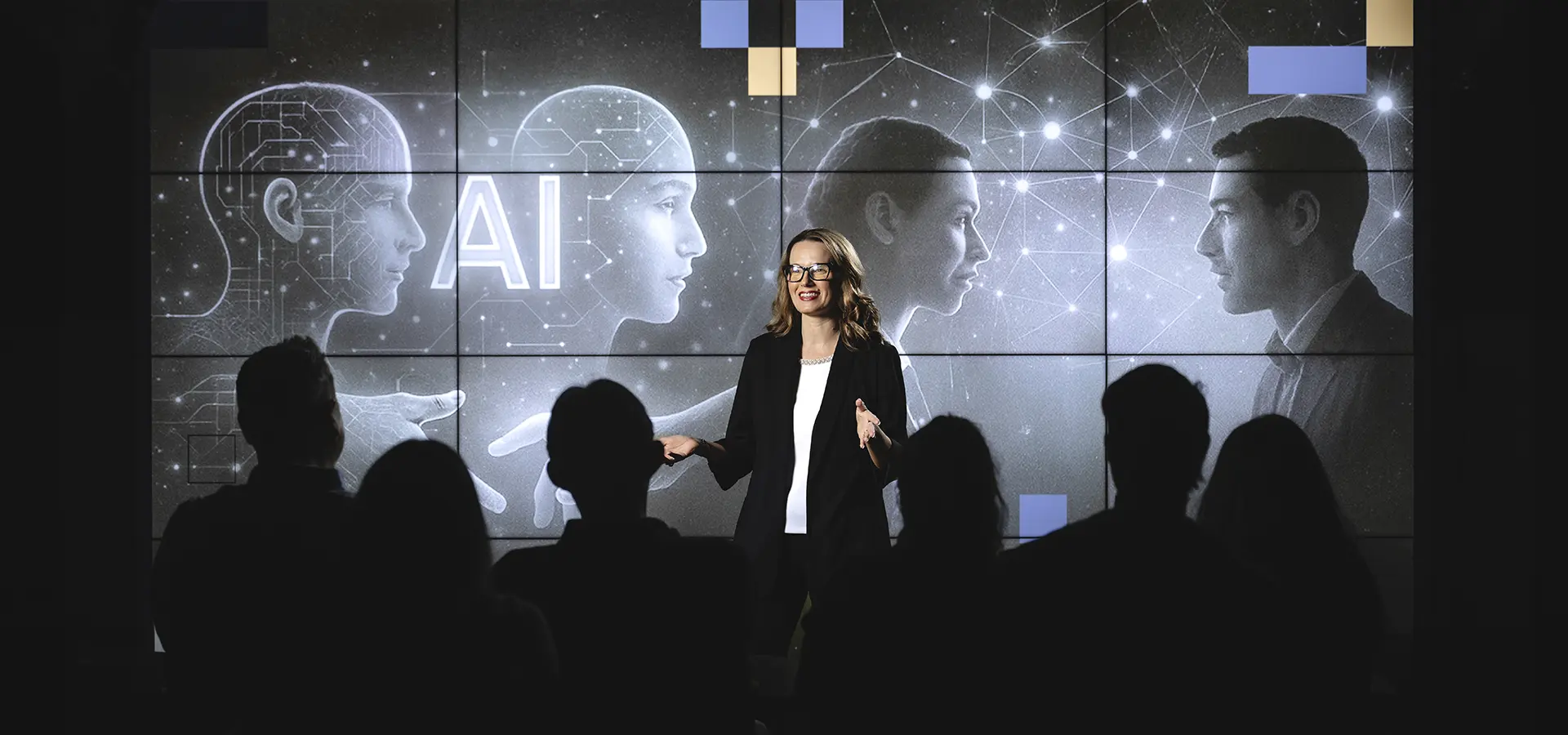
Workplace communication today is complex. Between emails, texts, Slack or Teams messages, virtual meetings, client pitches, reports, and so on, it can be difficult to keep up — especially when engaging with multiple stakeholders. Because communication drives much of what organizations do, the questions we need to ask are: How do we keep up and level up?
The answer: combine five people-first communication skills — audience analysis, emotional intelligence, critical thinking and problem-solving, building connection and trust, and communication ethics — with emerging tools like artificial intelligence (AI) and large language models (LLMs).
Let’s explore some ways to build a strong foundation as a people-first communicator and then learn how to incorporate AI as a communication tool for your work.
Audience analysis: shape messages that put people first
If we want to communicate well with others, then we need to think about what our audience needs from our communication exchanges, not just what we need. To understand your audience better, ask yourself three questions:
Emotional intelligence: practice awareness and empathy
Emotional intelligence is about understanding and navigating your own emotions while trying to understand where your audience is coming from and empathizing with the emotions they are navigating. We cannot ignore that people are people, and they are going to experience emotions at work. This is because we FEEL messages first, then we think about them and act or react. We must realize that we are going to feel messages, and so are other people. The thinking part of the process is where we practice our emotional intelligence, and it is a vital part of being a people-first communicator. When practicing good emotional intelligence, ask yourself these two questions:
Critical thinking and problem-solving: use clear, careful thinking to solve problems
Critical thinking and problem-solving are at the core of our competence in executing our job well. This starts with being aware, and that includes checking emails, attending meetings, etc. We then need to know our priorities and respond appropriately. This may require us to set boundaries sometimes on what needs to be tackled first. Another big part of critical thinking is keeping track of our work, getting it done and finally closing the loop on all work tasks. As you practice critical thinking and problem-solving, ask yourself these four questions:
Building connection and trust: cultivate trust to create stronger teams
Building connection and trust are both key to developing stronger teams and cultivating a culture where people feel valued. Here, effective listening, showing up authentically, setting healthy boundaries as needed, and using clear communication are critical. When building connection and trust, ask yourself these three questions:
Communication ethics: demonstrate integrity with every message
Communication ethics is critical to developing and maintaining your credibility. Being honest and transparent, fair and consistent, and responsible are ethical qualities that everyone appreciates, especially at work. Use this question to guide you as you practice communication ethics:
These five Roberson People-First Communication Skills are all interconnected and foundational to being a good communicator. They are not something that AI can do on its own, but starting with a people-first foundation and then leveraging AI as a communication tool can help you be more effective and efficient in your work. Let me explain.
Criticisms
While some have been early adopters of using AI for business communication tasks, others have been critical of using the technology, fearing it will:
Healthy boundaries
While these are all valid concerns, they can be mitigated by setting healthy boundaries around how we use AI in business communication. So how do we do this?
The Muse (brainstorming)
When using AI for brainstorming, we can generate new ideas and reframe ways of looking at old issues or challenges. It can encourage creativity, and it can help you to be audience-focused.
The Architect (outlining/organizing)
AI can be used to help outline or organize the structure of a message. The built-in architect can help you to create a logical structure and flow to your message while reducing redundancies.
The Ghost Writer (the first draft)
AI can write first drafts, which can save time and provide a different perspective from the very beginning, allowing you to focus on other higher-level work. Note that first drafts should only be used by those who know their own voice really well. If you don't really know your own voice, it can be easy for you to become siloed and not be able to think of other ways that you can discuss content.
The Communication Coach (revising/editing)
Finally, we can use AI for revising and editing messages. Here, AI can help make messages more concise and clearer, check for any writing errors and help improve the style and tone of the message.
In the new world of AI, where many fear that it will replace our voices and critical thinking abilities, we have an opportunity to leverage this technology to amplify both our voices and our problem-solving skills by establishing a strong foundation with people-first communication skills and setting healthy boundaries for AI usage.
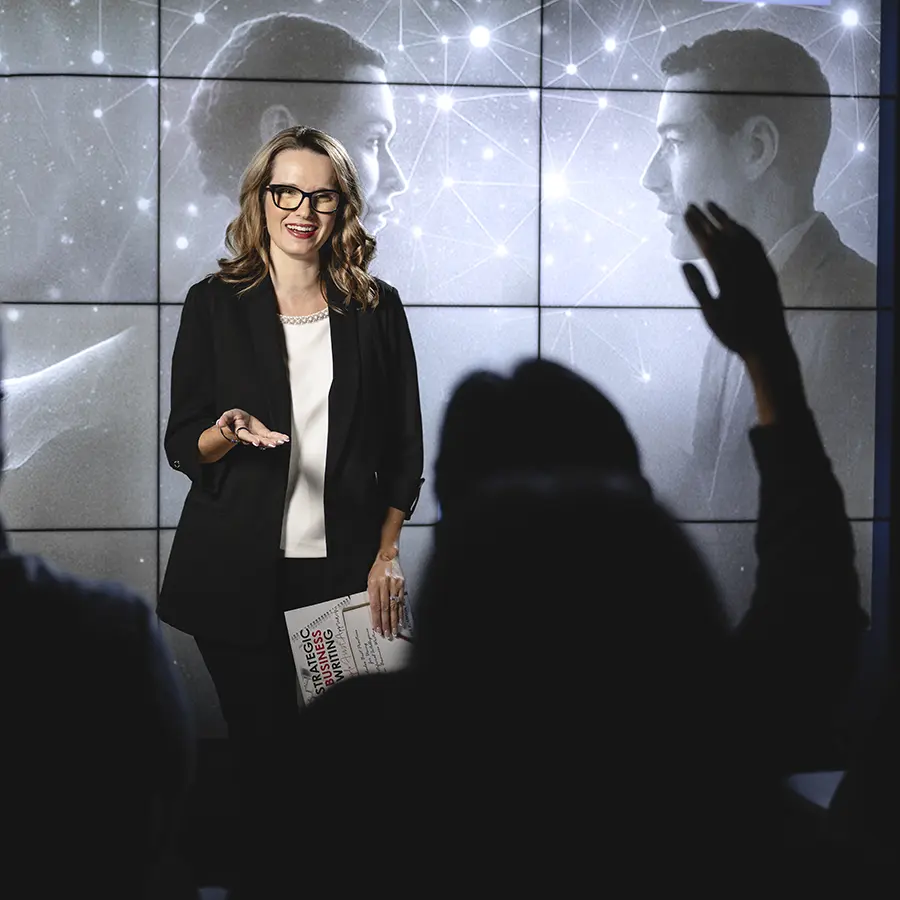
That is exactly what we are doing in the Mitch Daniels School of Business in MGMT 33500 Strategic Business Writing, a core undergraduate course I piloted in 2021. It has scaled up; this academic year we are offering 34 sections taught across five faculty members. Our students are learning these five foundational people-first communication skills so they can communicate and work better with others. They are also discovering what their voice sounds like when they write, then learning how to leverage AI to elevate their voice, rather than replacing or eliminating it. They are becoming people-first communicators, equipped with emerging technology and prepared to lead in the future. Our future looks bright.

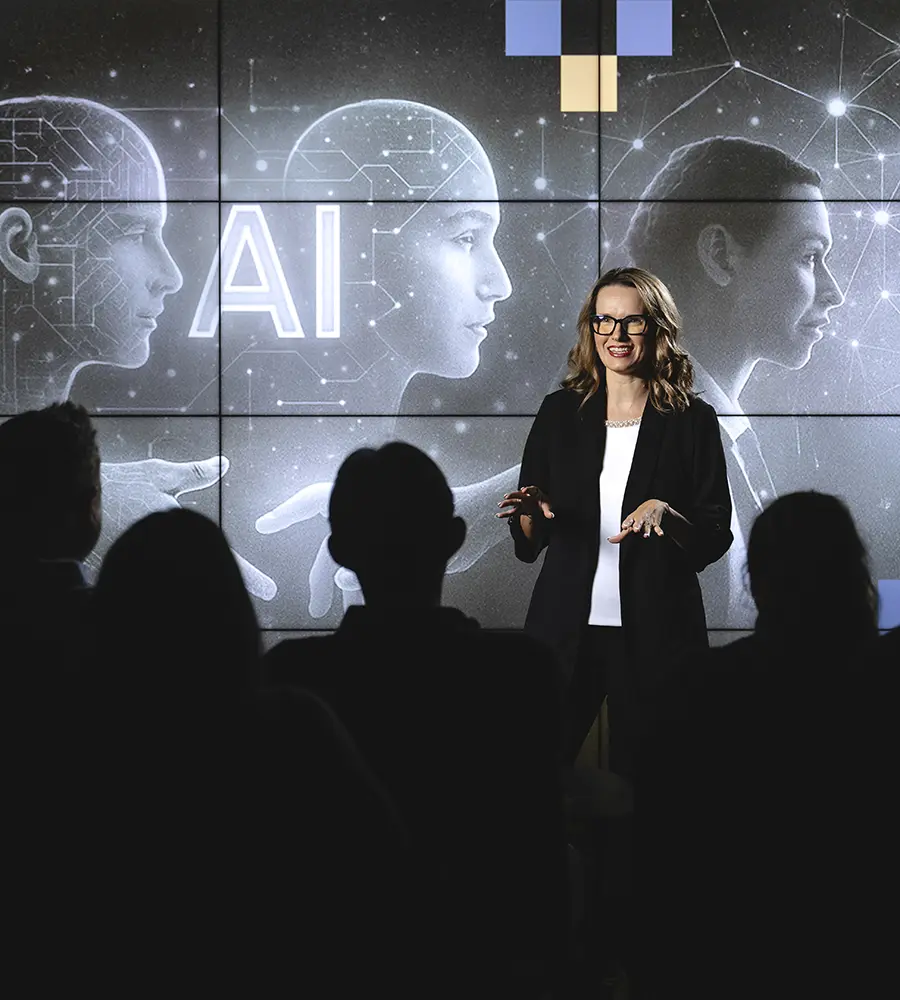
Professor Kasie Roberson is a Clinical Associate Professor in the Department of Organizational Behavior and Human Resource Management, Head of the Leadership Coaching Institute in the Center for Working Well, and Course Director for MGMT 33500 Strategic Business Writing at the Mitch Daniels School of Business at Purdue University. She recently represented Purdue and the Daniels School of Business at Hello Sunshine’s Sunniefest in Dallas, where she spoke about how to ethically integrate AI into your work and life. She also collaborated on the new Sunnie AI Playbook, released a few weeks ago.
A strategic communication expert, executive coach, and award-winning faculty member, she is also the author of “Strategic Business Writing: A People-First Approach.”